


Anglo-Saxon treasure blocked from leaving UK
Anglo-Saxon treasure blocked from leaving UK

Owen Sennitt - NorfolkTue, September 8, 2026 at 5:43 AM UTC
0

An "exceptionally rare" Anglo-Saxon ornament more than 1,400 years old has been blocked from leaving the UK by the government.
The metal mount, depicting a four-legged animal, was discovered by a metal detectorist in Holme Hale, near Swaffham, Norfolk, in 2024.
The temporary ban prevents it from leaving the UK permanently, allowing organisations, such as Norwich's Castle Museum, the chance to acquire it so it can remain a national treasure.
Art minister Ruth Mackenzie said keeping the object in the UK would offer researchers an "important window into our Anglo-Saxon past".
The ornament is among thousands of artefacts found in Norfolk, which is considered the UK's treasure capital due to the high number of finds each year.
A temporary ban was triggered after the item's founder applied for an export licence.
Experts reviewed the application and urged the government to intervene to stop the artefact leaving the country permanently due to its "outstanding connection with our history and national life", a Department for Digital Culture, Media and Sport spokesperson said.
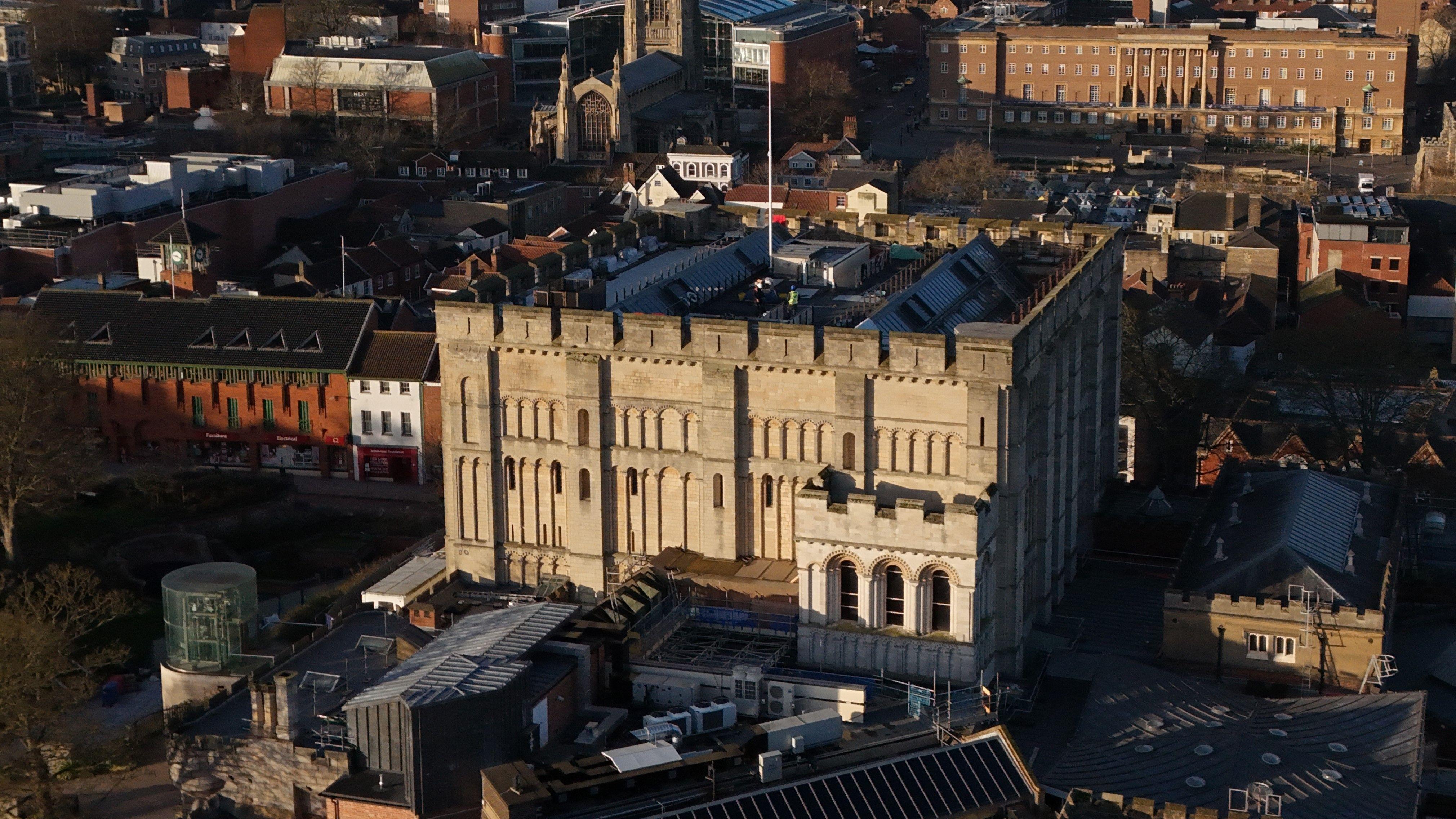
Norwich Castle has a large collection of Anglo-Saxon objects
The intervention will prevent the item leaving the country for at least six months, giving UK institutions the chance to submit offers to buy it.
Helen Jacobsen, a member of the review committee, said: "It will be a huge loss if it cannot be saved for the nation and I hope very much that a home can be found for it in a national museum."
It has been valued at £1,054.
More stories from Norfolk
Plans for major overhaul of councils halted
How long could you manage on £3 of food a day?
Athlete hopes to finish Ironman after brain injury
Why is it special?
The mount is believed to have been made in the late 5th or early 6th Century and is made out of a copper alloy, depicting a thin-bodied and long-snouted four-legged animal.
Advertisement
It is extremely rare because it presents a clear image of a four-legged animal, while other survivng examples are highly stylised.
Katy Cubitt, an emeritus professor of medieval history at the University of East Anglia, said the object would likely have been an "indicator of status and wealth" and the owner may have believed it had "magical protective qualities".
She said she had not seen such an item before and that it may have been attached to something like a belt or helmet.
Where could it end up?
Institutions from across the UK will now have the chance to bid for the item.
The BBC has asked Norfolk County Council's museums service if it would consider purchasing the item, but it said it could not comment.
Norwich Castle already has a collection of more than 900 Anglo-Saxon and Viking objects.
Cubitt hopes it will stay in Norfolk.
She said: "It would be wonderful if it ended in the Castle Museum. There it could be seen in context with other major finds from this period."
The professor also praised the actions of the metal detectorist, saying they did the right thing by registering the find with the Portable Antiquities Scheme at the British Museum.
"We live in an age where metal detectorists are turning up all sorts of goods that we wouldn't otherwise have found and which are sometimes destroyed through deep ploughing," she said.
Do you have a story suggestion for Norfolk? Contact us below.
Follow Norfolk news on BBC Sounds, Facebook, Instagram and X.
More related stories
-
England's top treasure finds revealed by county
One of a kind 7th Century gold coin found in field
Country's treasure hotspots revealed by new data
Related internet links
-
Department for Culture, Media and Sport

Source: “AOL Breaking”
